
Why Every Project Needs a Social Impact Assessment
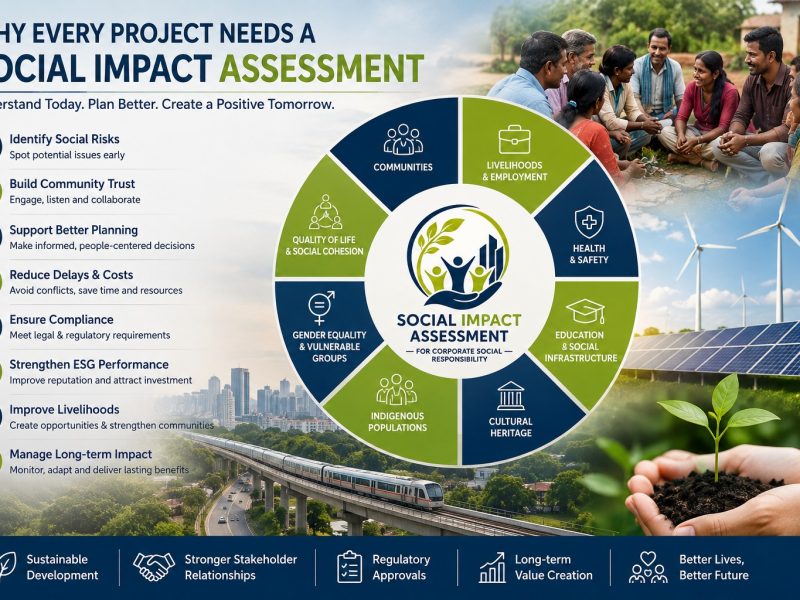
Every development project whether it involves infrastructure, renewable energy, mining, manufacturing, urban development, or corporate social responsibility (CSR) is designed to generate economic and social value. However, projects can also bring unintended consequences, such as displacement of communities, livelihood disruptions, environmental stress, cultural changes, or unequal distribution of benefits. Identifying these impacts before implementation has become essential for ensuring sustainable and inclusive development.
A Social Impact Assessment (SIA) is a systematic process that evaluates the potential social consequences of a proposed project on individuals, communities, and institutions. It enables organizations to understand stakeholder concerns, anticipate risks, enhance positive outcomes, and develop mitigation measures that promote long-term social well-being. Today, SIAs have evolved from being merely a regulatory requirement to becoming a strategic tool for project planning, stakeholder engagement, and Environmental, Social, and Governance (ESG) compliance.
What is a Social Impact Assessment?
A Social Impact Assessment is the process of identifying, predicting, evaluating, and managing the social impacts associated with a project before and during its implementation. It examines how a project may affect:
• Local communities
• Livelihoods and employment
• Public health and safety
• Education and social infrastructure
• Cultural heritage
• Indigenous populations
• Gender equality and vulnerable groups
• Quality of life and social cohesion
The findings help organizations make informed decisions while minimizing adverse impacts and maximizing community benefits.